Friday, 28 June 2019

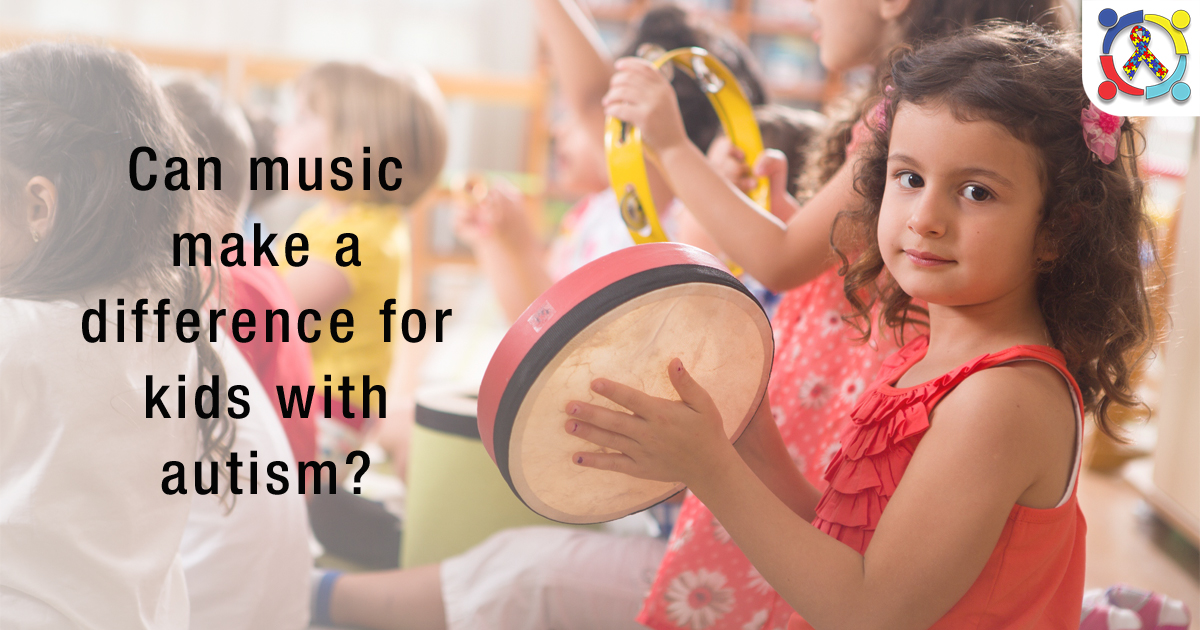
Can music make a difference for Kids with Autism?


Children with autism exhibit a lack of interest, show a preference for objects, stereotyped mannerism, etc. Resistance to sudden change, (in routine, work or food), is expressed with tantrum or self-injury. They also have communication deficits like lack of verbal and non-verbal interactions and difficulty building friendships. Music therapy is a favorable way to treat people with autism irrespective of age or ability.
Music therapy for autism is one of the most beneficial interventions to help individuals with cognitive and emotional challenges. It helps to improve their ability to function, develop communication skills and also lower anxiety. People with autism are responsive to music. As they find it to be motivating and engaging. Music therapy also acts as a natural ‘reinforce’ to help them cope with sound sensitivities. 
After assessing the needs and goal of children, a music therapist develops a treatment strategy, with the required objectives, to provide suitable action. Music therapists work with individuals using a variety of music and techniques to hone their skills.
Encourage social interaction
Children with autism show signs of emotional and social engagement during music therapy sessions. A trained therapist uses music and songs to improve children’s social interaction skills. in the music session, the kids are allowed to pass and share instruments, gathering around a piano, and learn to listen and concentrate on various notes played.
Improve behaviour
It has been observed that music therapy sessions improve inattentive behavior in children with autism. There was also an improvement in behaviors like restlessness and aggression after music therapy sessions.
Improve communication
Children with autism having non-verbal disability show difficulty in following verbal commands. With music therapy for autism, the pairing of music with actions and repetitive singing have instigated the non-verbal kids to attempt verbal communication.
Music to reduce anxiety
Studies have proved that children who received music therapy showed a decline in their anxiety-related level.
Click here to know more.
Music therapy is beneficial to not just children but to adults as well. The therapy sessions have crucial communication building exercise and relaxing playtime to motivate the participants. The therapists develop their needed skills by introducing singing, dancing, and playing sounds on instruments as well. They help in creating a safe learning environment for children to recuperate soon.
To contact a professional music therapist in your city click here.

Thursday, 27 June 2019

Some of the Top pick Autism Related Books


The emerging market for books related to autism is penned by parents or authors exclusively for people with special needs who tend to be overlooked. Inspired by the literature many more authors, as of late, have lent their support in educating people about ways to handle manage and treat children with autism.
Some of the top picks of books related to autism topic is from memoirs that are easily understood by parents and caretakers of people on the spectrum. These books are available on Kindle, in Pdf or paperback version. If you need good books about autism, click on this link provided by Autism Connect here.

·     A PARENT'S GUIDE TO AUTISM
This is an extremely helpful educational guide that can encourage parents to indulge in occupational therapy activities at their own home.
This award-winning edition consists of ways to train a child with autism to control repetitive behaviours, toilet training, cope with sudden changes in routine, and much more. With simple explanations and easy exercises, this book is sure to make daily activities enjoyable and encourage the child to succeed with his/her everyday tasks.
Availability
eBook
For Kindle/Paperback/Free for eBook
English
 ·     A Parents Guide to Vision In Autistic Spectrum Disorders (2015)
By: Ian Jordan
The world of a child with autism is very different because they face difficulties with facial expressions, repetitive behaviour, etc. This is one of the best autism related books, a perfect guide for parents, where the author Ian Jordan provides a simple introduction to what seems to be a complex subject.
Availability
 Kindle/Paperback
Kindle/Paperback/ for eBook
English
 ·        A Positive Approach to Autism (2000)
By: Stella Waterhouse
This book, by Stella Waterhouse, provides a positive outlook on how people with autism can overcome their drawbacks such as tantrums and anxiety with various treatments. She debates the pros and cons of current treatments and also emphasizes on how a child with autism perceives the world. She also relates the causes of autistic condition, symptoms and behaviours such as hyperactivity, attention deficit, obsessive compulsive disorder and many other symptoms that surround a child with autism. This book is an interesting guide for both professionals and non-professionals.
Availability
Stella Waterhouse
Paperback
Kindle/Paperback
English
·     A Thorn in My Pocket (2004)
By: Eustacia Cutler
This is a true story of a mother who narrates her experience laced with emotion, happiness, struggles and disappointment in raising her daughter who was diagnosed with autism. The mother of Temple Grandin, the most famous person with autism today, tells about her struggle with her husband and medical authorities to keep her daughter from being sent to an institution. This is one of the most prominent books related to autism that project the journey of a mothering a child with autism to be full of trials, guilt, frustration, anger, goals and fear of the unknown.
It’s a known fact that most mothers of children with autism share similar experiences and feelings. The author Eustacia Cutler guides parents through her personal experience of raising a daughter with autism during a time when people were not fully aware of autism. Sheshares her doubts and searches for answers to her quest amidst a situation that offered her little support.
Availability
Kindle/Paperback
Kindle/Paperback
English
 The autism related books are written especially for children on the autism spectrum and their parents and caregivers and also for siblings and friends. Regardless of the specific audience, these books about the causes, signs, symptoms and various therapies for the disorder, provide a level of knowledge that can be achieved only through a good reading.

Monday, 24 June 2019

Medical Management for a Child with Autism


There are things that parents can do to help their child with Autism overcome the challenges which they face. It is important to give them the love and support they need to be the best parent.They can always make a decision as to what is best for their child, regarding medical management of autism, once they have sufficient information about the benefits involved.
There are a variety of therapies and medical approaches for autism treatment. Some autism therapies and medicines focus on reducing problematic behaviours in the child. They help in building communication and social skills and deal with sensory integration problems, motor skills, hyperactivity, sleep disturbance, etc.
It is extremely important for the parents to do a quick research, talk to experts regarding autism treatment. The goal of autism treatment is to treat a child’s array of symptoms and needs. For schools, medical management service, and therapists in your area, access the Autism Connect Directory here.
Children with autism, prescribed medicines such as Vitamins and mineral supplements,have shown improvement in symptoms such as hyperactivity, sleep disturbances, gut- related issues, aggression, etc. Medical intervention done under a registered medical practitioner is strongly recommended.
Medical management of autism, such as drugs, is provided to improve the symptoms of autism. Some medications are not approved for children below 18 years of age, therefore, parents should consult the FDA for complete information or consult a child’s doctor.
Some of the required medicine, approved by the medical management service,given to deal with the symptoms of autism are:
Stimulants
Drugs falling under stimulant medication group, like methylphenidate, amphetamine, and dextro-amphetamine, help to increase focus and decrease hyperactivity in children with autism. They are mostly prescribed for those with mild symptoms of autism.
Anti-anxiety medications
Treatment with these medications relieve anxiety and panic disorders that are associated with ASD.
Anticonvulsants or Anti-epileptics
Medical management of autism such as anti-epileptics medications treat seizures and its related disorders, such as epilepsy.  Sodium valproate is a commonly prescribed anti-epileptic to control core symptoms such as hyperactivity, affective instability, aggression, etc. Almost one-third of individuals with autism have symptoms of seizures.
Psychoactive or anti-psychotic medications
These medications reduce irritability in children with autism. Anti-psychotic drugs like risperidone and Aripiprazole decrease hyperactivity, reduce stereotyped behaviors, aggression, self-injury, minimize withdrawal and mood swing among people with autism.
Mood stabilizers
Mood stabilizers are prescribed to treat behavioural symptoms like aggression, self-injurious behaviours and impulsivity in people with autism. they are categorized as:
·         Antidepressants:Antidepressantsare prescribed to treatsymptoms like anxiety,depression, and obsessive.
·         Mood stabilizers: Drugs like lithium,valproic acid, topiramate, lamotrigine, carbamazepine, levetiracetam and oxcarbazepine are consumed to treat disorders like anxiety and depression. 
Anti-epileptics
·         Anti-epileptics are prescribed to control seizures. Sodium valproate is a commonly approved antiepileptic for autism.

To know more about medicines that can help a child with autism, click here.

Autism Connect is one of the leading family support organizations that offer useful information about medication, therapies and support to parents and caregivers.


Sunday, 16 June 2019

Occupational Therapy is an Effective Intervention for Autism


Occupational therapy is a useful intervention that helps to develop, maintain or recover the lost activities and skills in a person with neurological disorders such as autism. This wellness rehabilitation is focused on the need and goal of individuals with autism and their families. Occupational therapists offer specialized assistance to people with special needs and help them lead independent, productive, and satisfying lives.
Occupational therapy interventions help children with autism to participate in school, regain their skills and cognitive ability. The services include:
·         An individualized evaluation to determine the goals of the person/family
·         A planned and customized intervention to improve the individual’s ability to perform his/her daily activities
·         To ensure that the goals are met  or to alter the current intervention plan for quick/ better result
Once the required evaluation is completed, the occupational therapists assist the child and his/her family with developing skills in various areas. Some of the most areas addressed in occupational therapy for autism are:
Social skills
Social skills like greeting others,maintaining eye contact when speaking, the ability to read signs and body language, understanding the flow of conversation, recognize the feeling of other, etc. are areas which a child with autism may find difficult to handle. An occupational therapist uses creative ways to help a child understand social norms and rules of social communication.
Emotion regulation
Emotion regulation skills help in managing emotions such as stress, anxiety, annoyance and frustration in a child with autism. Occupation therapy helps in identifying and involving appropriate strategies to manage intense emotions. An occupational therapist uses a variety of methods such as play activities, games, videos, etc.
Sensory integration
Children with autism, at times, have difficulty with sensory processing. This can lead to the child to react to loud sound, bright light, touch and movement.   Occupational therapists detect and treat sensory difficulties with activities using swings,dancing, music, trampoline, etc. 
Motor Skills
In children with autism,there are some delays in gross or fine motor skills or both.Occupational therapy for autism involves the assessment process to detect the areas that needs to be developed. The occupational therapists find techniques to help a child build muscles strength and limb co-ordination to help them move independently.
Overall, an occupational therapist can assist a child and his/her in recovering their lost skill in various areas. They are specifically trained to address the challenges in children with autism and provide treatment plans to improve the condition.
To know more about occupational therapy visit here.


Tuesday, 28 May 2019

A Gluten Free Diet Plan For Autism


Autism or autism spectrum disorder is a broad range of neuro-developmental disorders that disturb the child by disrupting his/her ability to interact or communicate socially. These disorders are associated with developmental delays that steer the child towards severe physical issues such as gastrointestinal (GI) disorders, sleep disorders, mental health challenges like anxiety, seizures, depression, etc. To reduce physical symptoms like GI, parents try alternative treatments along with a specialized diet plan for autism.
Symptoms of autism usually appear between age 2 or 3 in a child or sometimes even earlier. Parents must consult the best physician to get the child diagnosed and to help the child regain some of his/her skills and abilities. They can also approach a licensed dietician who can help them in chalking out an autism diet plan according to the child’s health issues and taste preferences. An early intervention can lead to positive outcomes in the life of a child with autism.
Many dieticians prescribes a gluten-free and sugar- free diet that are hazardous to people with autism. They advise a diet of fruits, vegetables or nuts and to avoid using packed or tinned foods as they, at times, contain traces of gluten that are not mentioned in the nutrition label. A diet plan for autism also excludes seafood as they contain toxins like mercury that tends to harm the person’s immune system.  Parents can also visit: HERE

A Gluten-Free Diet for Autism

An autism diet plan is an alternative treatment for autism. Parents are advised to adopt a strict autism diet plan, and avoid foods containing gluten (wheat, barley, rye) and casein (dairy products) in the child's daily consumption. At times the doctor’s advice ‘allergy testing’ to confirm whether the child with autism is allergic to certain components found in his diet.
Gluten is a mixture of proteins found in the seeds and grains such as rye, wheat and barley. According to the doctors, a diet containing gluten has an adverse effect on the brain as the harmful proteins do not help in curing the condition but worsen them. This adverse reaction leads a child to intense negative behaviour.
When on a gluten-free diet, the child with autism is advised an apt diet plan for autism which contains ample fibres, minerals, and vitamins. At times supplements also help to make up for the absence of these nutrients.  For information about professional dietician in your vicinity, visit: https://www.autismconnect.com/nutritionists-dieticians
The use of an autism diet plan reduces the symptoms in a child with autism and improves social and cognitive behaviours and also benefits speech deficiency in the children.

Monday, 27 May 2019

Dance Therapy Works For The Core Deficits Of Autism


Parents and caretakers of children with autism, constantly seek alternative therapies to support and to help them regain their fullest potential. Dance therapy is a program based on the body movement that works to conquer the core deficits of autism.
Children with autism deal with many challenges! As they have limited verbal communication, they invest their interest in objects rather than in the people around them. They also at times become agitated due to their over-stimulated sensory system.
Dance therapy is an attuned therapeutic process where the therapists work with individuals, focusing on their specific needs. With this form of creative therapy, the therapists use the expressive elements of steps as an intervention to improve various physical and social disorder found in individuals with autism. The goal of a dance therapy for autism is not only to teach various nimble steps but to focus on it as an exercise session for the development of the person’s motor skill and physical posture.
The therapists work with a small group of people, observing their movement and instigating them to be socially active with other participants.  When with other kids on the dance floor, the group moves together in uniform steps, holding hands and twisting to the tune in a unifying rhythm. The dance therapy for autism gives them the sense of being joined together in a joyful and revitalizing way.  In a dance, turning towards each other and offering a hand is just like a spontaneous greeting that occurs non-verbally, which may turn into a wave and may grow into a verbal expression, “hi,” gradually.
Parents and caregivers are also invited to participate, thus helping in a better quality of parent/child relationship. They can also conduct this dance therapy at home with proper steps provided by the therapists. For information on the best dance therapist in your locality visit: HERE 
Supportive therapies such as dance therapy, aquatic therapy, etc., along with a perfect diet plan hasten the recovery in children with autism.
Apart from enhanced verbal expression and positive social interaction, a dance therapy for autism has surfaced amazing recovery in areas like motor function, coordination and balance. The goal of dance therapy is to adopt the ‘dances & relationship’ pattern to treat children.

Friday, 24 May 2019

Dance Therapy Works For The Core Deficits Of Autism


Parents and caretakers of children with autism, constantly seek alternative therapies to support and to help them regain their fullest potential. Dance therapy is a program based on the body movement that works to conquer the core deficits of autism.
Children with autism deal with many challenges! As they have limited verbal communication, they invest their interest in objects rather than in the people around them. They also at times become agitated due to their over-stimulated sensory system.
Dance therapy is an attuned therapeutic process where the therapists work with individuals, focusing on their specific needs. With this form of creative therapy, the therapists use the expressive elements of steps as an intervention to improve various physical and social disorder found in individuals with autism. The goal of a dance therapy for autism is not only to teach various nimble steps but to focus on it as an exercise session for the development of the person’s motor skill and physical posture.
The therapists work with a small group of people, observing their movement and instigating them to be socially active with other participants.  When with other kids on the dance floor, the group moves together in uniform steps, holding hands and twisting to the tune in a unifying rhythm. The dance therapy for autism gives them the sense of being joined together in a joyful and revitalizing way.  In a dance, turning towards each other and offering a hand is just like a spontaneous greeting that occurs non-verbally, which may turn into a wave and may grow into a verbal expression, “hi,” gradually.
Parents and caregivers are also invited to participate, thus helping in a better quality of parent/child relationship. They can also conduct this dance therapy at home with proper steps provided by the therapists. For information on the best dance therapist in your locality visit: HERE
Supportive therapies such as dance therapy, aquatic therapy, etc., along with a perfect diet plan hasten the recovery in children with autism.
Apart from enhanced verbal expression and positive social interaction, a dance therapy for autism has surfaced amazing recovery in areas like motor function, coordination and balance. The goal of dance therapy is to adopt the ‘dances & relationship’ pattern to treat children.