Showing posts with label music therapy. Show all posts

Monday, 30 December 2019

Autism and Music

Autism is a complex neurological disorder that affects the verbal, social and cognitive developments within the first three years in a child after birth. These disabilities result in difficulty while communicating either verbally or non-verbally, lead to depression and uncontrolled outbursts of anger due to frustration.  Music therapy for autism helps the children to convey their thoughts and work in unison to overcome their communication and social deficit.  
Early intervention through art therapy such as dance therapy, drama therapy, and music therapy creates a supportive setting to help children bond with their parents, therapists and other participants in a healthy way. Music therapy helps children with autism to know how to communicate with others besides learning the use of instruments and the beats or rhythm to motivate one’s brains and body.
Can Music Make a Difference?
Music is said to stimulate both hemispheres of our brain. A therapist can use a tune or a melody and various instruments to support cognitive ability and self-awareness. Music therapy for nonverbal autism encourages communicative behavior which one of the most devastating symptoms that children with autism have difficulty with. To make music, the children are trained to work in unison and interact with one another. But for children with autism who find interacting with others difficult, the therapists first help them to bond with the chosen instrument and then develop a bonding with the group along with their instrument.
The Musical Support And What To Expect
Music therapy for nonverbal autism assists in teaching children how to communicate by learning a new word from a song, and also to understand how to act based on the emotion and the messages that it (song) convey. Listening to music in a group let the children feel confident to sing along with others. Dancing to the tune of the music can help to stimulate the sensory systems, and to enhance motor skills.
Music therapy is beneficial to not just children but also adults with autism. The music therapists involve valuable communication building exercise at the sessions. The therapists help to develop children’s skills in their own space with patience and understanding in a safe and jovial environment. A performance by the children receives applause and words of praise to motivate confidence.
Music sessions involve techniques for stimulating speech and sound, the skill to imitate and improved attention in children. The effectiveness of music therapy has revealed improvement in brain structure and its functions without the use of medications. 

Friday, 28 June 2019

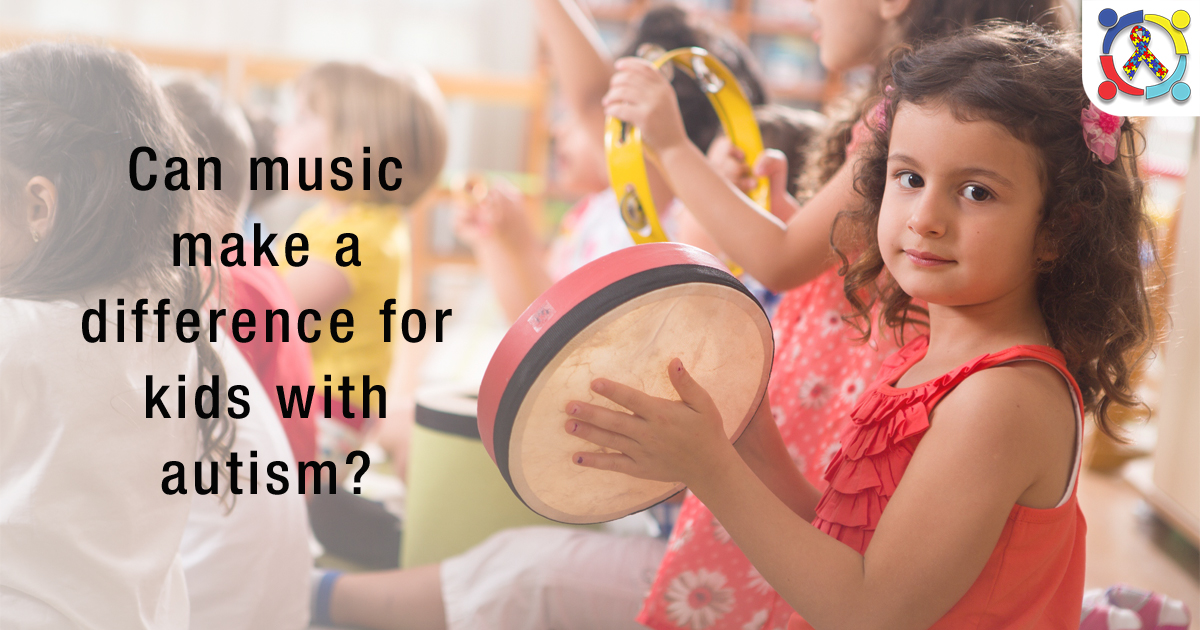
Can music make a difference for Kids with Autism?


Children with autism exhibit a lack of interest, show a preference for objects, stereotyped mannerism, etc. Resistance to sudden change, (in routine, work or food), is expressed with tantrum or self-injury. They also have communication deficits like lack of verbal and non-verbal interactions and difficulty building friendships. Music therapy is a favorable way to treat people with autism irrespective of age or ability.
Music therapy for autism is one of the most beneficial interventions to help individuals with cognitive and emotional challenges. It helps to improve their ability to function, develop communication skills and also lower anxiety. People with autism are responsive to music. As they find it to be motivating and engaging. Music therapy also acts as a natural ‘reinforce’ to help them cope with sound sensitivities. 
After assessing the needs and goal of children, a music therapist develops a treatment strategy, with the required objectives, to provide suitable action. Music therapists work with individuals using a variety of music and techniques to hone their skills.
Encourage social interaction
Children with autism show signs of emotional and social engagement during music therapy sessions. A trained therapist uses music and songs to improve children’s social interaction skills. in the music session, the kids are allowed to pass and share instruments, gathering around a piano, and learn to listen and concentrate on various notes played.
Improve behaviour
It has been observed that music therapy sessions improve inattentive behavior in children with autism. There was also an improvement in behaviors like restlessness and aggression after music therapy sessions.
Improve communication
Children with autism having non-verbal disability show difficulty in following verbal commands. With music therapy for autism, the pairing of music with actions and repetitive singing have instigated the non-verbal kids to attempt verbal communication.
Music to reduce anxiety
Studies have proved that children who received music therapy showed a decline in their anxiety-related level.
Click here to know more.
Music therapy is beneficial to not just children but to adults as well. The therapy sessions have crucial communication building exercise and relaxing playtime to motivate the participants. The therapists develop their needed skills by introducing singing, dancing, and playing sounds on instruments as well. They help in creating a safe learning environment for children to recuperate soon.
To contact a professional music therapist in your city click here.